What is the difference between a proxy and a VPN: the main differences between the services
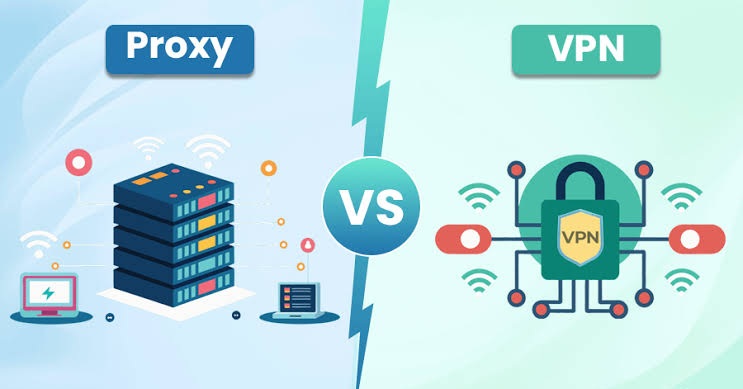
A proxy server acts as an intermediary between your device and the internet. It enhances privacy by masking your IP address and, in some cases, helping manage how your traffic is handled.
When you access a website through a proxy, your request is first sent to the proxy server. It processes the request and forwards it to the destination. Once the response is received, it is returned to you via the same proxy.
Proxies can perform multiple functions, including hiding the user’s IP address, caching content, and controlling access.
They are commonly used for:
- data protection and privacy;
- server load distribution;
- faster access to resources;
- bypassing restrictions.
A proxy server can exist either as a standalone device or as software running on a system or server.
VPN (Virtual Private Network) is a technology that establishes a secure connection between your device and the internet. It encrypts your traffic and conceals your IP address, improving both privacy and security.
Unlike proxies, a VPN routes your data through an encrypted tunnel to a remote server. That server then communicates with the destination and sends the response back to you.
What is the global difference between a proxy server and a VPN?
A proxy and a VPN are both used to improve online privacy, but they operate differently and provide different levels of protection.
VPN
Pros:
- Provides strong encryption and a high level of security.
- Allows access to restricted content.
- Protects against various online threats.
- Useful when connected to public Wi-Fi networks.
Cons:
- May reduce speed due to encryption.
- Some services limit bandwidth or speed.
- Can slightly impact device performance.
Proxy servers
Pros:
- Hide the real IP address.
- Offer a basic level of anonymity.
- Can improve loading speed in certain cases.
Cons:
- Do not encrypt traffic, which lowers security.
- May have speed or bandwidth limitations.
- Quality and stability can vary.
What is better to choose: a VPN or a proxy server? Or do I need to use them at the same time?
Using both tools simultaneously is usually unnecessary, as they serve overlapping but distinct purposes.
A VPN provides stronger protection and is better suited for sensitive tasks. A proxy, in contrast, is easier to set up and often faster, making it suitable for simpler operations like bypassing restrictions.
If your goal is basic access to blocked resources, a proxy is sufficient. For higher security and data protection, a VPN is the better option.
Proxy Types
HTTP Proxy
Designed for handling HTTP traffic. It can cache data, balance server load, and support basic security functions.
SOCKS Proxy
A more flexible solution that works with various protocols over TCP/IP. Suitable for bypassing restrictions and supporting different types of traffic.
SSL Proxy
Encrypts data exchanged between client and server, protecting sensitive information such as credentials or payment data.
DNS Proxy
Processes and redirects DNS requests, helping bypass restrictions and improve performance.
Ping Proxy
Supports ICMP traffic and is used for checking server availability and diagnosing network issues.
FTP Proxy
Used for file transfers via FTP, improving both security and efficiency.
Transparent proxy
Operates without user-side configuration and is often deployed in organizations to monitor and control internet usage.
VPN (Virtual Private Network) has several advantages over free proxies:
- Security: VPNs encrypt traffic, making it inaccessible to third parties, while free proxies usually do not provide encryption.
- Privacy: VPNs hide your IP without exposing user data, whereas some free proxies may log or sell information.
- Content access: VPNs more reliably bypass regional restrictions, while free proxies may fail or be too slow.
- Speed: Paid VPN services often outperform free proxies in stability and performance.
- Support: VPN providers typically offer customer support, unlike most free proxy services.
- Reliability: VPN infrastructure is generally more stable than free proxy networks.
- Functionality: VPNs often include extra features such as ad blocking or malware protection.
Overall, VPNs are a more secure and dependable option compared to free proxy solutions.
Should I use free options for proxy servers and VPNs?
Both proxies and VPNs can help protect privacy and bypass geographic restrictions. However, free versions come with trade-offs.
They are often slower, which can affect streaming or downloading large files. Additionally, some free services may monetize user data by sharing it with third parties.
If you choose a free option, it is important to select a provider with a solid reputation and clear privacy policies. Keep in mind that free plans usually include limitations on speed, bandwidth, or available features.